How to Handle Hostel Life Without Losing Your Peace
Six people, one room, one socket and one bucket of water. Here is how to survive Nigerian hostel life with your grades, money and sanity intact.
5 min read
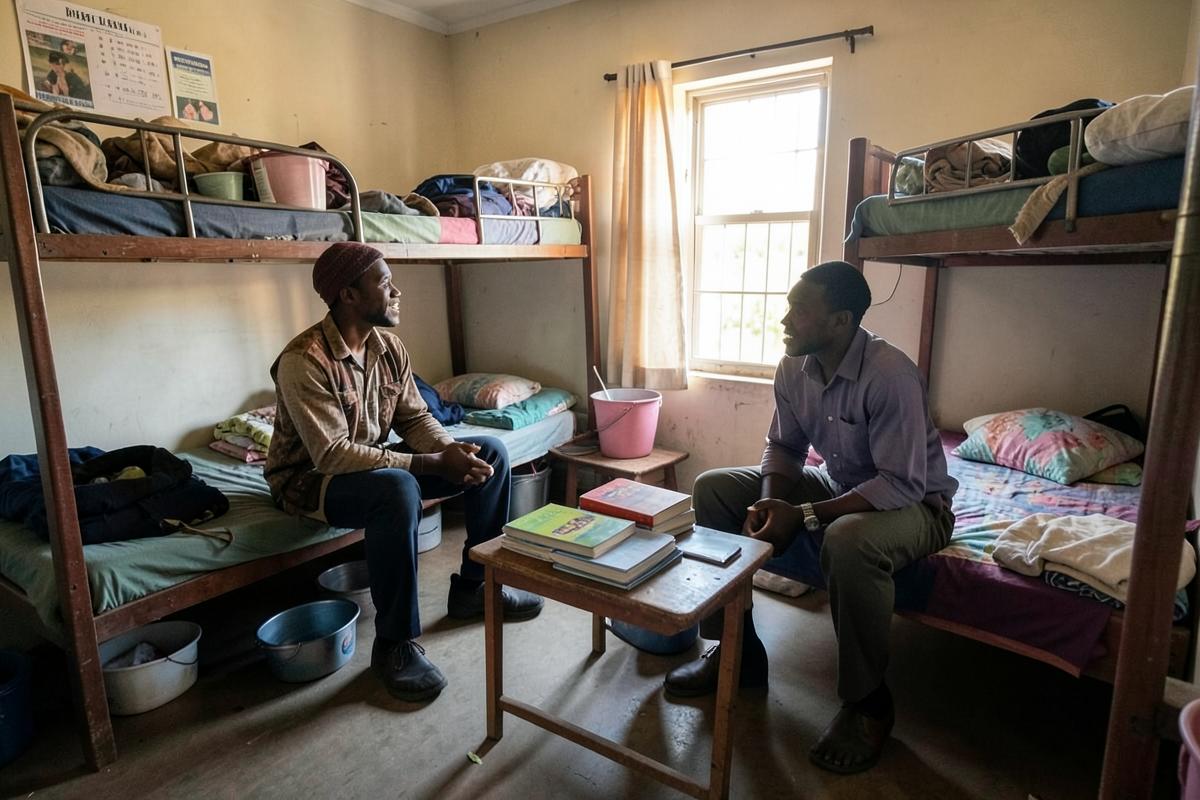
My first hostel room had six bunks, one working socket, and a door that only closed if you lifted it slightly. On my third night, someone's phone alarm went off at 4:30 a.m. for a prayer he did not wake up for, a generator started outside, and a roommate began frying eggs at 5 a.m. I lay there staring at the mattress above me and thought, seriously, how do people read in this place?
They do. I eventually did. Hostel life is not a punishment to be endured until you can afford a self-contained room off campus — it is a skill set. Here is what I wish someone had told me in my first week.
Sort out your corner in the first 48 hours
Whatever space is yours — a bunk and a locker — organise it immediately, before habits form.
- A box or bag with a padlock. Not because your roommates are thieves, but because rooms have visitors, and visitors have friends.
- Keep valuables minimal and quiet. Laptop out of sight, charger not left in the socket, phone never on the bed when you step out.
- A bucket, a cup, a bowl, a torch or rechargeable lamp. Buy them in the first week; prices near campus rise as the semester starts.
- One flat surface for books. A locker top counts. Reading needs a place that is not your mattress.
- Label everything. Your name on the bucket, the bowl, the extension box. It prevents 80 percent of quarrels.
The socket, the water and the generator: hostel politics
Every conflict in a Nigerian hostel is really about a shared resource. Handle those three well and you will rarely quarrel.
- Electricity. Agree a rotation for charging when NEPA brings light. Do not unplug someone's phone without saying so. Buy your own extension box and let people use it — generosity here buys peace for the whole session.
- Water. Fetch early, before the queue. Keep your own reserve and do not touch anybody's bucket, ever. That single rule prevents more fights than any other.
- Noise. Own earphones. Requesting silence in a six-man room is unrealistic; blocking noise is under your control.
Choose your roommates' habits, not just your roommates
You often cannot pick who you live with, but you can pick who you spend time with inside the room.
- Notice, in the first two weeks, who reads, who sleeps all day, who brings crowds, who borrows money and does not return it.
- Be friendly with everybody, close with the ones whose habits you respect.
- Do not make your bunk the room's entertainment centre. Once your corner becomes the hangout spot, your reading time is gone.
Being cordial and slightly boring is a strategy. It keeps peace without draining you.
Protect your reading somewhere else
Here is the honest truth: for most people, deep reading does not happen in a shared room. Find two alternatives and use them consistently.
| Place | Good for | Watch out for |
|---|---|---|
| Reading room / library | Long focused sessions | Closing time, seat competition |
| Empty lecture hall in the evening | Free space, board practice | Security, poor lighting |
| Under a tree / quiet corridor, mornings | Fresh brain, cool air | Heat later, mosquitoes at dusk |
| Room between 5–7 a.m. | Everyone is asleep — genuinely quiet | Requires sleeping early |
That last row is the one people underestimate. The hostel is a completely different place at 5 a.m. I got more done in those two hours than in any afternoon.
Money in the hostel
Shared living quietly drains money if you are not deliberate.
- Cook or buy in bulk with one trusted person. A bag of rice, beans, garri and pepper split two ways beats buying single plates daily.
- Avoid the "we are all contributing" trap for things you did not agree to. Learn to say "count me out this time" without a long explanation.
- Lend carefully. Small amounts, to people who have returned money before. Never lend what you need for food.
- Keep an emergency ₦2,000–₦5,000 apart from your spending money, ideally not in the room.
Health and hygiene, because a crowded room spreads everything
- Wash your own plate immediately. Piled plates bring cockroaches, which bring illness.
- Use your own towel, sponge, razor and cup. Non-negotiable.
- Sleep under a net or use repellent — malaria costs you more days of study than any other single thing.
- Do not skip meals to save money. A cheap plate of beans beats a free headache.
- Keep basic medication and know where the campus clinic is before you need it.
Handling conflict without becoming an enemy
You will have disagreements. Two rules kept me out of trouble:
- Never argue in front of an audience. Wait until it is just the two of you. People defend their pride when others are watching, and small matters become "he disgraced me".
- Address the behaviour once, calmly, in specific terms. "Please, when you cook at 5 a.m., the smoke wakes me. Can we make it 6?" is better than "you people don't have consideration".
If someone is genuinely dangerous — theft, threats, harassment — that is not a room matter. Report it to the porter or hall warden and keep a record of dates. Do not manage it alone to avoid being called a bad person.
Your peace is a routine, not a mood
The students who looked calm in my hostel all had rhythms:
- Fixed sleep window, even in noise (earphones, sleep mask, back to the door).
- One time of day that belongs only to them — early morning, or a walk in the evening.
- A weekly reset: wash clothes, tidy the corner, plan the week, on the same day every week.
- Something that is not academics: football, choir, gym, a small business, a friend outside the department.
Peace in a hostel is not silence. It is having something predictable to return to while everything else is loud.
What hostel life gives you, if you let it
I complained for a full session. Later I realised what I had gained: I can now work in noise, share space with difficult people, negotiate over resources, budget on very little, and settle a quarrel without escalating it. Those are grown-up skills, and people who lived alone through school often learn them much later, in offices, at higher cost.
You are not just surviving a room. You are being trained.
So think about your own room right now: which one shared thing — the socket, the water, the noise, the visitors — causes most of your stress, and what small agreement could you propose this week to fix it?