How to Plan Your Monthly Student Budget in Nigeria
Practical guidance for Nigerian university students: plan your monthly student budget in nigeria
2 min read
How to Plan Your Monthly Student Budget in Nigeria
A monthly student budget is a plan for deciding where your available money should go. Costs vary between universities, cities and accommodation arrangements, so the best budget is based on your own real expenses.
Start With Reliable Income
List money you realistically expect from allowances, part-time work, freelance jobs, scholarships or other reliable sources. Do not budget around money that has not arrived or is uncertain.
Separate Needs and Wants
Essential expenses may include food, transport, data, academic materials, accommodation-related costs and personal care. Flexible spending may include entertainment, snacks and non-essential purchases.
A want is not automatically bad. You simply need to know which category it belongs to.
Give Each Category a Limit
Allocate essential expenses first, then flexible spending and money for future needs. Your exact amounts should reflect your situation.
Divide Monthly Money Into Weeks
A monthly amount can disappear quickly without a weekly guide. Divide flexible categories into weekly targets so you can notice overspending early.
Track Small Purchases
Snacks, extra transport fares and repeated small purchases can add up. Record the date, item and amount in a notes app or spreadsheet.
Plan Food
Compare the cost of cooking with buying prepared food where safe and practical. Plan simple meals and avoid buying impulsively when hungry. Do not sacrifice adequate nutrition simply to meet a budget.
Remember Transport and Academic Costs
Estimate normal transport and allow room for necessary trips. Also remember printing, photocopying, practical materials, project work and other school expenses.
Keep an Emergency Buffer
Set aside a small amount for unexpected necessary expenses. It does not need to be large at first; consistency matters.
Review Weekly
Ask where you spent more than expected, which expenses were unavoidable and what bills are still coming. Adjust the next week rather than abandoning the budget.
If Your Income Changes
If you receive less money, protect essential expenses first and reduce flexible spending. If you receive extra money, consider putting part toward upcoming school expenses or savings.
Simple Checklist
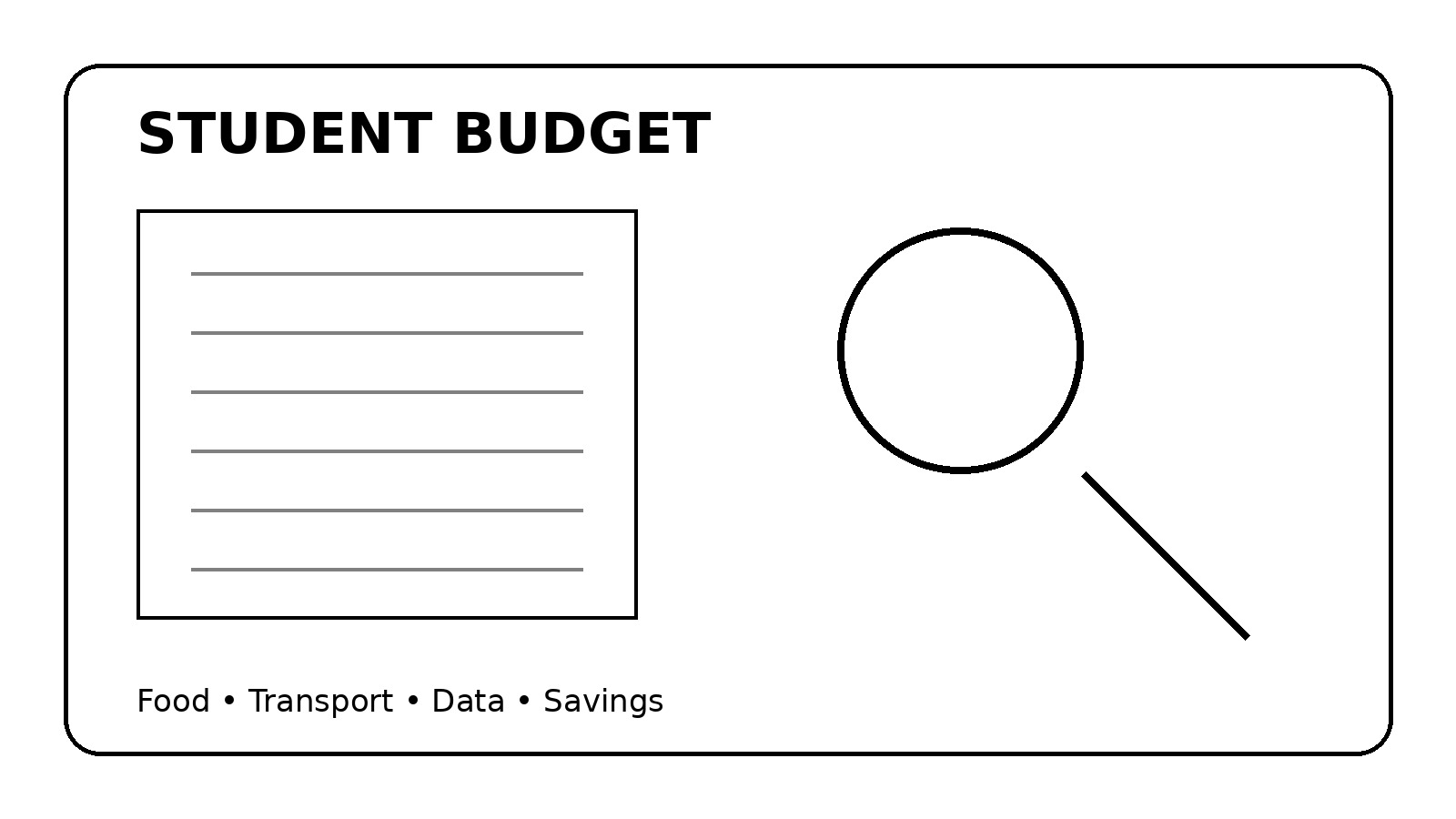
Record income, fixed expenses, food, transport, data, academic costs, emergency money and flexible spending. Review the plan weekly.
A student budget is not about never spending. It is about making sure your money lasts long enough to support the things that matter.