How to Read for Long Hours Without Burning Out
Long reading is a skill, not a punishment. Here is how I learned to sit with a textbook for six hours in Nigerian heat and still remember what I read.
6 min read
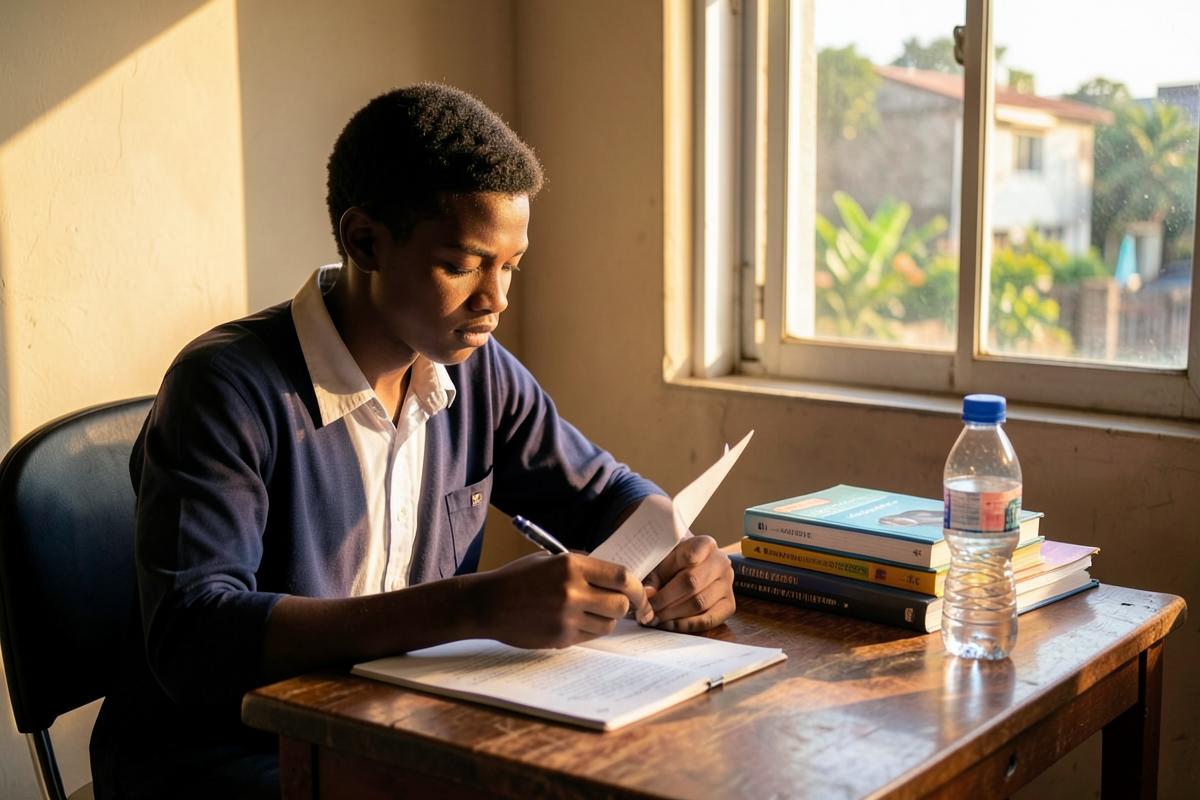
The first time I tried to read for eight hours straight, I lasted about fifty minutes. I remember it clearly because I had written a plan on a piece of paper: 8 a.m. to 4 p.m., three courses, no phone. By 8:52 a.m. my back was hurting, my eyes were dry, and I was reading the same paragraph on enzymes for the fourth time without a single word entering my head.
That evening I told myself I was not a "reading person". I was wrong. I was just doing it the way you do a punishment instead of the way you do training. Long reading is exactly like long-distance trekking — you do not start by running; you learn pace, rest and fuel. Below is the system that took me from fifty minutes to genuine six-hour reading days without the crash that follows cramming.
Understand what actually tires you
When students say "I can't read for long", they usually mean one of four things:
- Eye and posture fatigue — bad light, bad chair, book flat on a table so your neck bends forward.
- Attention fatigue — no breaks, so your brain quietly checks out while your eyes keep moving.
- Decision fatigue — you spend energy deciding what to read next instead of reading.
- Blood sugar and heat — you skipped breakfast, the room is hot, and NEPA has taken light so there is no fan.
Notice that only one of those is about brains. Three are about environment and planning. That is good news, because environment is easier to fix than intelligence.
Fix the physical setup first
Before you talk about techniques, sort out the boring things:
- Raise the book. Put your textbook on a stack of two other books so it slants towards your face. Your neck will thank you at hour three.
- Light from the side, not behind you. A rechargeable lamp placed to your left or right (depending on your writing hand) removes shadow across the page.
- Sit on a chair with a back. Bed reading is sleep reading. If you must sit on a bed, sit against a wall with a pillow behind your lower back.
- Water within reach. A 75cl bottle beside you. Dehydration in Nigerian afternoons feels exactly like tiredness.
- Airflow. If there is no light, open the window and read facing it. If the heat is unbearable at 1 p.m., shift your heavy reading to 6 a.m. and 6 p.m., and use afternoons for lighter work.
Read in blocks, and make the blocks honest
The mistake I made was measuring reading in hours. Hours are a poor unit because a "hour" of reading can mean anything from real work to page-turning while thinking about someone's WhatsApp status.
I switched to blocks:
| Block type | Length | Best for |
|---|---|---|
| Sharp block | 25 minutes | Difficult new topics, calculations |
| Standard block | 45 minutes | Normal reading, note-making |
| Long block | 90 minutes | Past questions, writing full answers |
Then I planned the day in blocks, not hours. A realistic strong day looks like this:
- 6:00 – 7:30 — long block (hardest course, brain is fresh)
- 7:30 – 8:00 — breakfast, no screen
- 8:00 – 8:45 — standard block
- 8:45 – 9:00 — break, walk outside
- 9:00 – 9:45 — standard block
- 9:45 – 10:15 — proper break: food, stretch, no scrolling
- 10:15 – 11:00 — standard block (different course)
- 11:00 onwards — repeat with longer breaks as heat rises
That is four to five hours of real reading before noon, and it does not feel heroic. It feels ordinary. Ordinary is what you can repeat tomorrow.
Protect the break, not just the block
Most students study for 45 minutes and then destroy their own recovery by opening TikTok. Twenty minutes later they are not rested; they are stimulated and scattered.
A break that actually restores you:
- Stand up and leave the chair. Physically leave.
- Look at something far away for a minute — the road, trees, the sky. Your eye muscles reset.
- Drink water, eat something small.
- No feed, no reels, no comment sections.
A break that drains you: same chair, phone in hand, five apps.
If you need noise, play instrumental or a familiar song without following the lyrics. Your break is for your eyes and body, not for entertainment.
Alternate the type of work, not just the subject
Reading the same kind of task for hours is what burns you out fastest. Alternate modes:
- Read → then close the book and write what you remember.
- Read → then solve two past questions.
- Read → then teach the topic out loud to an imaginary classmate.
- Read → then draw the process as a diagram.
Switching mode wakes up the brain the same way switching from walking to climbing wakes up different muscles. It also converts reading into recall, which is where the marks live.
Feed and sleep like it matters, because it does
You cannot out-discipline hunger. Three practical rules that changed my stamina:
- Eat before heavy reading, not during. Beans, eggs, bread, akara, pap — anything with protein holds longer than pure carbohydrate. A plate of rice at 11 a.m. and nothing else guarantees a 1 p.m. crash.
- Guard your sleep window. Six to seven hours minimum. Memory consolidation happens while you sleep; the person who reads until 3 a.m. daily is deleting half of what he reads.
- Nap for 20 minutes, not two hours. A short nap after lunch resets attention. A long nap makes you groggy and steals evening reading.
Plan the night before so mornings are automatic
Decision fatigue is silent. Before you sleep, write the next day on paper:
6:00  Chem — chapter 8 (bonding) + 10 questions
8:00  Maths — integration examples 1–12
9:15  Govt — read + summary page
When you wake up, there is nothing to decide. You just start. That single habit added roughly an hour of real reading to my day.
Signs you are heading for burnout
Stop and rest properly when you notice:
- You are reading but cannot summarise a single paragraph you just finished.
- Headache that returns every day at the same time.
- You start dreading the desk before you sit down.
- Irritation at small things, poor sleep, no appetite.
The cure is not "push harder". It is one lighter day, real food, real sleep, and a shorter target the next morning. I have never regretted taking a half day off. I have regretted many weeks of pretending to read.
A gentle two-week ramp
If you currently manage one hour a day, do not jump to eight. Try this:
- Week 1: three blocks a day (about two hours of real reading), six days.
- Week 2: five blocks a day, six days.
- Week 3 onwards: seven to eight blocks on weekdays, lighter weekends.
Stamina builds like muscle. By the third week the desk stops feeling like a fight.
The students I know who read longest are not the ones with the strongest willpower. They are the ones with the most boring, most repeatable routines — same time, same chair, same water bottle, same notebook.
What is the one thing in your current setup — the chair, the light, the phone, the food — that you already know is stealing your reading hours?